

Innovation
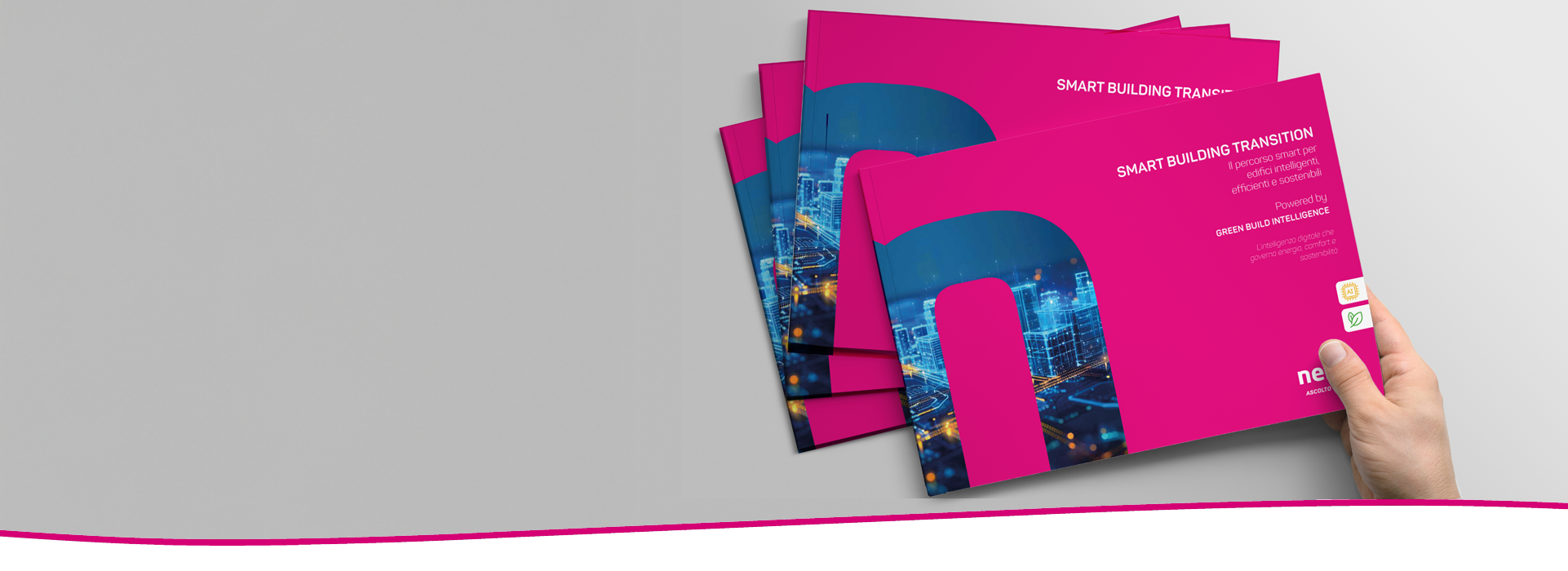
Smart Building Transition – The digital path to intelligent, efficient, and sustainable buildings
Smart Building Transition It is the method developed by nesea to support public and private organizations in the digital transformation of their real estate assets, through data, automation, and artificial intelligence.
The route is made possible by Green Build Intelligence, the software platform that integrates AI, IoT and Digital Twin to monitor buildings in real time, optimize energy consumption and improve operational and ESG performance.
Advanced features for intelligent building management
Smart Building Transition guides organizations towards digital and data-driven management of real estate assets. The journey is enabled by Green Build Intelligence, the software platform developed by nesea that integrates energy systems, plants and operational data into a single digital infrastructure.
 Real-time energy monitoring
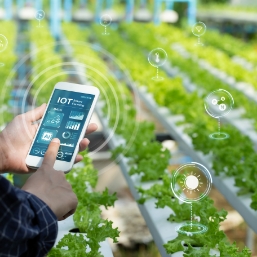
The platform collects data from IoT sensors and technological systems to monitor energy consumption, environmental conditions and building operation in real time
Real-time energy monitoring
The platform collects data from IoT sensors and technological systems to monitor energy consumption, environmental conditions and building operation in real time
 Advanced performance analysis
Analytics tools transform operational data into actionable insights to identify inefficiencies, analyze consumption, and support data-driven decisions.
Advanced performance analysis
Analytics tools transform operational data into actionable insights to identify inefficiencies, analyze consumption, and support data-driven decisions. Intelligent plant automation
The platform allows you to automatically adjust HVAC systems, lighting and energy infrastructure to improve energy efficiency and room comfort
Intelligent plant automation
The platform allows you to automatically adjust HVAC systems, lighting and energy infrastructure to improve energy efficiency and room comfort Centralized management
A unified dashboard allows you to monitor and manage buildings across multiple locations, simplifying real estate asset governance.
Centralized management
A unified dashboard allows you to monitor and manage buildings across multiple locations, simplifying real estate asset governance. Predictive maintenance support
Analyzing operational data helps identify anomalies and plan more targeted maintenance interventions, reducing plant downtime and maintenance costs.
Predictive maintenance support
Analyzing operational data helps identify anomalies and plan more targeted maintenance interventions, reducing plant downtime and maintenance costs.Advanced technologies for smart and connected buildings
Smart Building Transition It is enabled by a technological architecture that integrates operational data, facilities, and building energy systems.
The platform Green Build Intelligence combines IoT, Artificial Intelligence and Digital Twin to monitor, analyze and optimize building performance.
Digital Twin
The Digital Twin creates a digital replica of the building that integrates data from systems and sensors, allowing for performance analysis, scenario simulation, and improved energy and operational management.

Artificial intelligence
AI algorithms analyze operational and historical data to identify inefficiencies, predict energy trends, and support more effective building management decisions.

Internet of Things (IoT)
Connected sensors and devices collect real-time data on energy consumption, environmental conditions, and system operation, improving building monitoring and control.

Integration with BEMS systems
The platform integrates with existing BEMS systems and infrastructure, connecting facilities and operational data into a scalable digital ecosystem for building management.
Concrete benefits for building management
Thanks to the integration of data, automation and advanced analytics, buildings evolve from passive infrastructures to intelligent assets capable of generating operational and economic value over time.
Energy consumption
thanks to continuous monitoring of systems and intelligent optimization of energy in buildings.
Operating costs
thanks to the analysis of energy data and more efficient management of systems.
CO2 emissions
through more efficient use of energy resources and sustainable optimization strategies.
Optimized management time
through centralized digital management that simplifies the control of buildings and infrastructures.



 English
  Italiano